
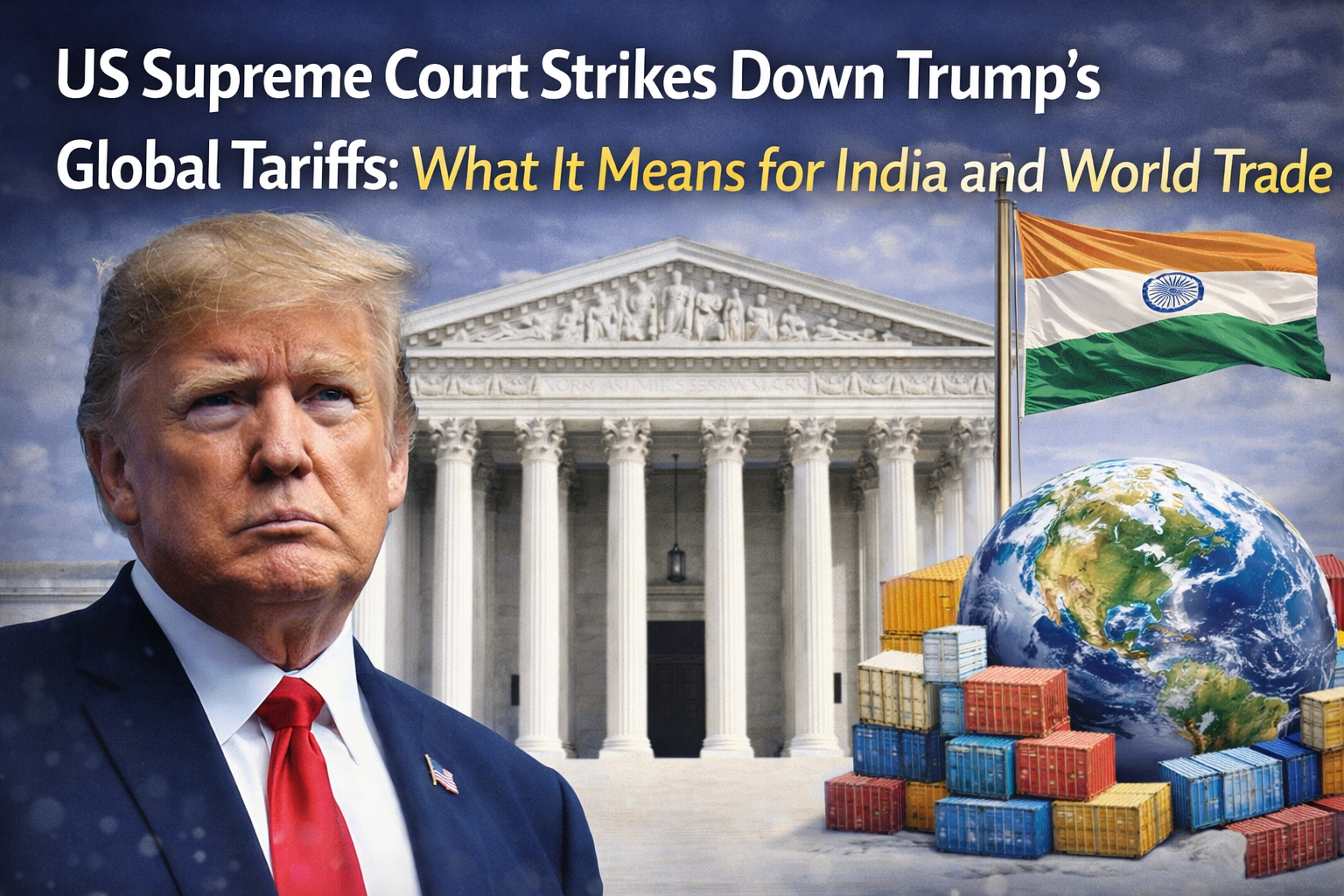

A surprise move by America’s top judges just wiped out ex-President Trump’s wide-ranging tax on imports. This twist hits nations such as India hard, shifts how world markets react, also alters how Washington handles trade deals ahead. Not every outcome was expected – yet here we are.
Supreme Court Halts Tariff Implementation?
A decision came down: the president misapplied legal authority when placing wide-reaching import fees on products from various nations. Instead of correct statutes, he pointed to emergency powers meant for financial threats, claiming such steps protected national economic stability.
Still, the Supreme Court found the law lacks clear wording letting the president set broad worldwide tariffs. Power to make taxes and trade duties sits mostly with Congress, the justices noted, not one leader acting solo. Because of this, numerous international tariffs rolled out under the rule are now ruled unlawful.
This decision is being seen as an important limit on presidential power in trade matters.
Nowhere else has such a move been interpreted quite like this one – a clear check on how far a president can go in handling trade. Power shifts quietly when courts step in, even if just to draw a line.
What tariffs changed?
Now the decision changes a handful of major rules
* A tenth of everything brought in pays a fee. Most goods crossing borders face this charge.
* Fees go up when nations like India face steeper trade charges. One country raises costs, another responds in kind. Tension builds through back-and-forth moves across borders. Prices shift as policies tighten between trading partners.
* A few items now carry extra charges because of sudden legal measures. What got hit? Only specific products faced these new costs when the crisis rule kicked in.
Falling after the ruling, those charges have lost force. When firms handed over payments, a path opens – refunds can follow court steps.
India Faces New Challenges Ahead?
Now there’s a lighter load for those shipping products from India. Before, American import taxes had climbed as high as 18 percent on various Indian items. Textiles felt it. So did makers of machinery, medicines, plus jewelers dealing in precious stones and metal crafts.
Half of what India sends to the US might soon face standard WTO taxes again. That shift could help Indian goods stand out more across the Atlantic.
A win in court bolsters India’s stance ahead of upcoming discussions with U.S. officials. With tensions eased, room opens for fairer terms built on mutual give-and-take.
Trump’s Immediate Response
Soon after the ruling, Donald Trump rolled out a fresh 10 percent worldwide tariff using another legal path – Section 122 of the Trade Act from 1974. That part of the law gives room for short-term import taxes lasting no more than 150 days, bypassing need for congressional sign-off.
Still, the clock is ticking on this fresh tariff – once time runs out, another green light might be needed to keep it going. So the fight in courtrooms and capitals about who controls U.S. tariffs? Far from settled.
Global Market Reactions
After the verdict, world financial markets shifted without delay. The move seemed favorable to those watching, especially on matters tied to cross-border commerce. Because prices at borders dropped, companies and buyers often pay less – this shift sometimes fuels broader economic momentum.
Even now, certain import taxes tied to national security stay active under separate U.S. statutes. Though numerous international levies were removed, friction around commerce lingers on.
A Shift in How the U.S. Handles Trade
A twist in US economic history comes from the Supreme Court’s recent call. Not every big trade move can skip past Congress anymore. India now gets breathing room today plus fresh talk options down the road.
One step at a time, choices now shape how leaders later handle trade rules across borders. What happens today might quietly set the rhythm for tomorrow’s economic moves.
