
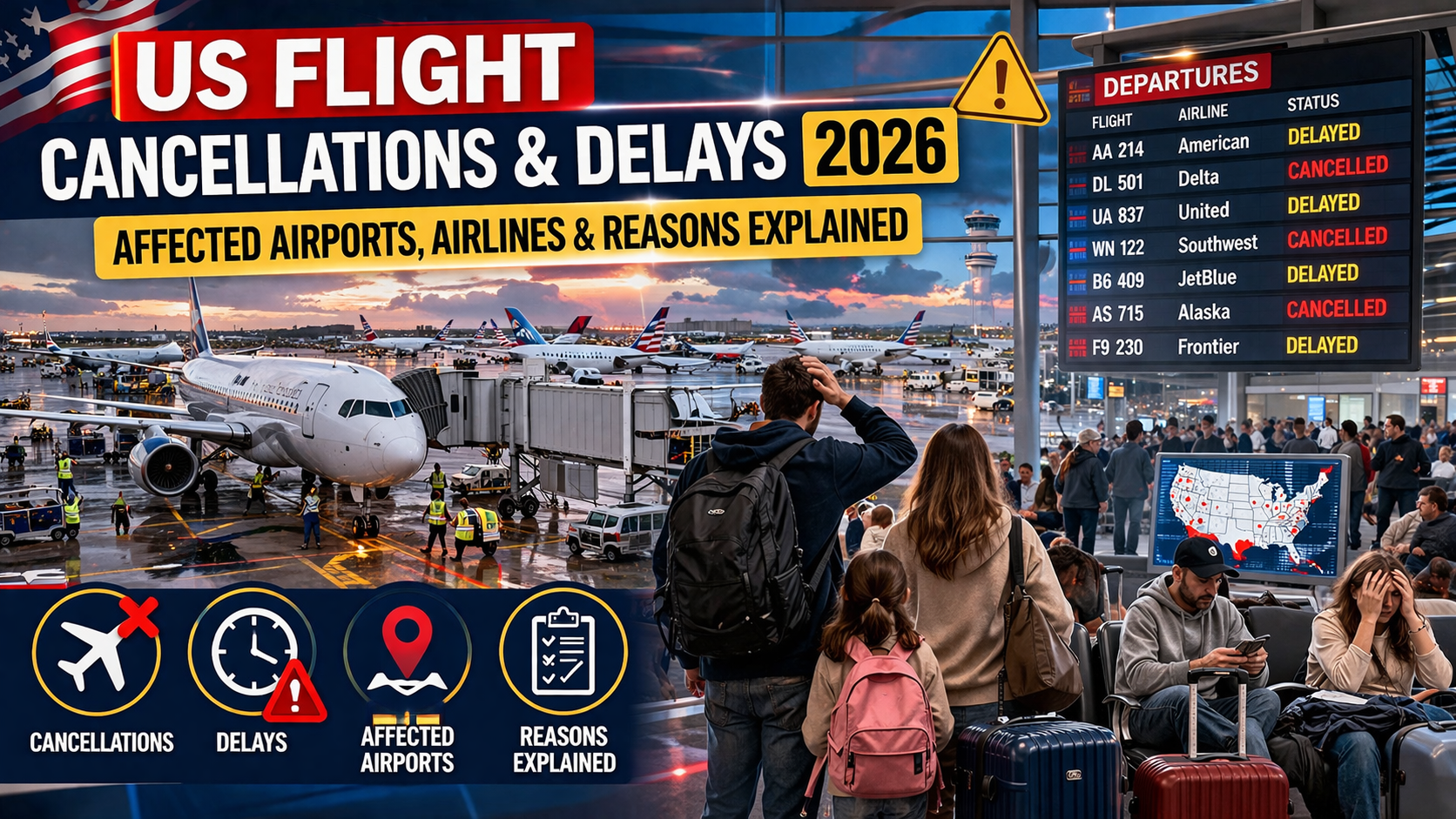

Midway through 2026, flights across America began stumbling – schedules frayed, departures vanished overnight. Major airports creaked under pressure, familiar airlines fumbled responses, millions of passengers bore the brunt. Peel back the surface and the roots of disruption run far deeper than delays alone.
How many flights got hit?
Now it’s clear – reports show the scale of disruption in ways hard to ignore
- Over 5,000–8,000 flights delayed daily during peak days
- Around 300–1,000 flights cancelled in a single day
- Flying during Easter meant thousands stuck waiting. Seven thousand delays hit on the busiest travel days. Crowds swelled as holiday plans took off. Airports filled fast that week. Planes sat idle while passengers counted hours. Delays piled up without warning. Travel slowed to a crawl several times. Journeys stretched longer than expected. Skies grew crowded each morning. Easter trips brought constant holdups
Flying fell apart fast – four thousand seven hundred late, three hundred scrapped in just twenty-four hours. That many delays piled up while cancellations added to the mess all at once.
Now visible, the full reach of this issue. How widely it’s moved becomes clear.
Most Affected Airports?
Big U.S. hubs feel the impact most today. Take these, for instance
Though struck badly, Atlanta ranks high on the list of affected hubs
- New York Airports JFK LaGuardia Newark
- Chicago O’Hare
- Dallas–Fort Worth
- Los Angeles
- Boston
- Houston
One morning at Washington Dulles delayed 146 flights, with delays showing up overseas by afternoon. Though the hub was quiet later, distant runways still felt the push of earlier hiccups.
Which Airlines Are Affected?
Few big American air carriers escape the effects – United finds itself involved, so does Delta. JetBlue faces changes too. Southwest isn’t left out either. Alaska Airlines deals with similar shifts. Most of them navigate new conditions now
- Delta Air Lines
- American Airlines
- United Airlines
- JetBlue
- Spirit Airlines
Flying got messy one busy day when many planes couldn’t stick to their schedules. A number of carriers saw it happen more often when travelers flooded airports.
Main Reasons Behind Flight Disruptions
Something odd happens when you look closer – not one cause stands out. A mix of things pulls at the seams instead. Pressure builds from corners you might not expect. Each piece adds weight, though none acts alone. The result? Everything shifts without warning
1. Bad Weather
Falling trees often snap power lines when skies turn violent. Lightning splits air during heavy downpours, rattling windows miles away. Gusts rip through neighborhoods long after rain fades.
Storms hit hard, shutting down flights by the hundreds. Air travel slowed as snow piled up overnight. Delays stacked through the day because runways iced over. Cancellations climbed when winds turned fierce. Skies stayed messy well into the evening hours
2. High Travel Demand
Bursts of travel during times such as Easter pack terminals and carriers tight. Airports creak under the rush when families move for holidays. Flights fill fast once spring breaks begin. Crowds swell at departure gates around religious festivals. Airlines scramble to keep pace when vacation peaks hit.
3. Fuel Shortages and Higher Prices
Fuel costs are climbing because of continuing worldwide unrest – tensions tied to Iran add pressure here. Not peace, but friction pushes numbers higher at pumps across regions.
- Flying less often now because expenses weigh too heavy. Costs climb, schedules shift instead of staying fixed. Some routes disappear while others change times. Money troubles push carriers to rethink what stays. Empty seats mean reworking plans becomes necessary. Higher prices force choices that shrink travel options slowly
4. Airport and Technical Prob0lems
- Runway closures and construction
- Aircraft maintenance delays
- Late incoming flights
Take San Francisco’s airport. Delays there happened because of storms. Construction on the tarmac played a role too.
Ripple Effect Across the Network
A ripple starts when a single plane misses its slot. That lag slips into others, unfolding through hubs far away.
A ripple starts small, yet one airport problem spreads fast across the whole country.
Impact on Passengers
Passengers are facing:
- Long waiting times
- Missed connections
- Last-minute cancellations
- Higher ticket prices
Finding new flights takes time now because so many people need seats. Getting bumped around like this slows everything down.
Conclusion
Storms keep planes grounded across America, while fuel prices climb higher each season. Not far behind, more travelers crowd terminals than years past. Hartsfield-Jackson sees longer lines, just like LaGuardia and O’Hare. Delta wrestles with missed schedules, much like United struggles beside American. Pressure builds when skies turn rough, especially through winter months.
Things might get better later. Still, keep an eye on updates if you are traveling. Checking your flight now and then helps. Getting ready early cuts down surprises along the way.
