
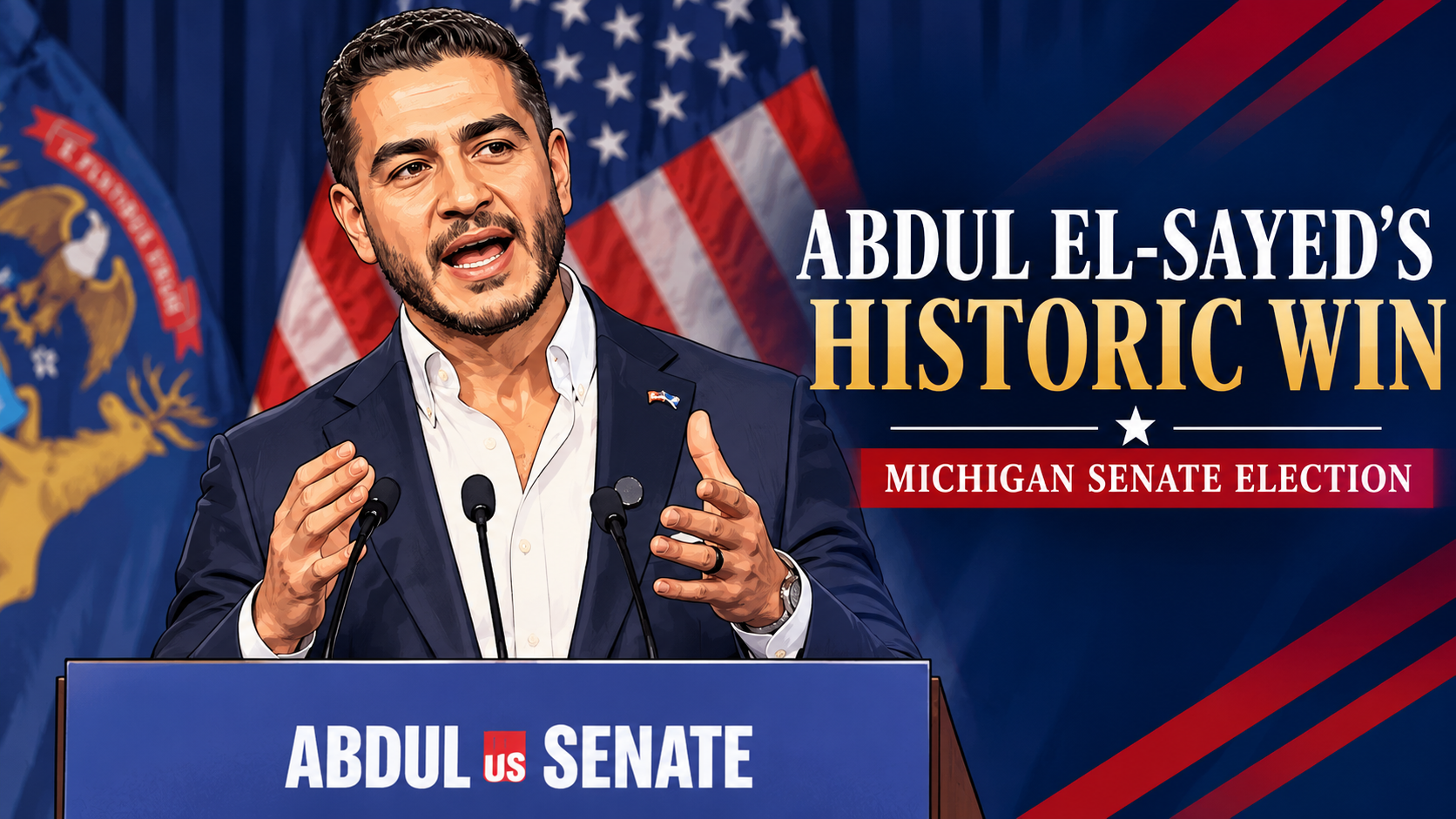

Abdul El-Sayed has made political history after winning Michigan’s 2026 US Senate election, defeating Republican candidate Mike Rogers. His victory has attracted national attention, not only because he is set to become the first Muslim American elected to the US Senate, but also because of his memorable victory speech addressing Vice President JD Vance.
A Historic Victory in Michigan
El-Sayed, a former public health official and progressive Democrat, secured the open Senate seat following a closely watched election campaign. His campaign focused on healthcare affordability, reducing corporate influence in politics, and expanding access to healthcare through Medicare for All.
His victory represents an important milestone for Muslim representation in American politics and highlights the growing influence of progressive candidates.
What Does “Habibi” Mean?
One of the most discussed moments from El-Sayed’s victory speech was his use of the Arabic word “Habibi” while addressing JD Vance.
The word generally translates to “my dear,” “my beloved,” or “my love.” It is commonly used in Arabic conversations among friends, family members, and loved ones.
El-Sayed used the expression humorously while highlighting what he described as a political irony: Vance would be constitutionally required to swear him into the Senate in January 2027.
The remark attracted attention because Vance had previously criticised El-Sayed during the election campaign.
A Message to Donald Trump
El-Sayed also addressed President Donald Trump, joking about the attention given to his name and saying that after the swearing-in, Trump could simply call him “Senator.”
His comments combined humour with a response to the criticism he faced during the campaign.
What Comes Next?
As senator-elect, El-Sayed faces the challenge of turning his campaign promises into policy. His victory has already become a significant moment in American political history, while his “Habibi” remark continues to generate discussion about language, identity, and political rivalry.
