
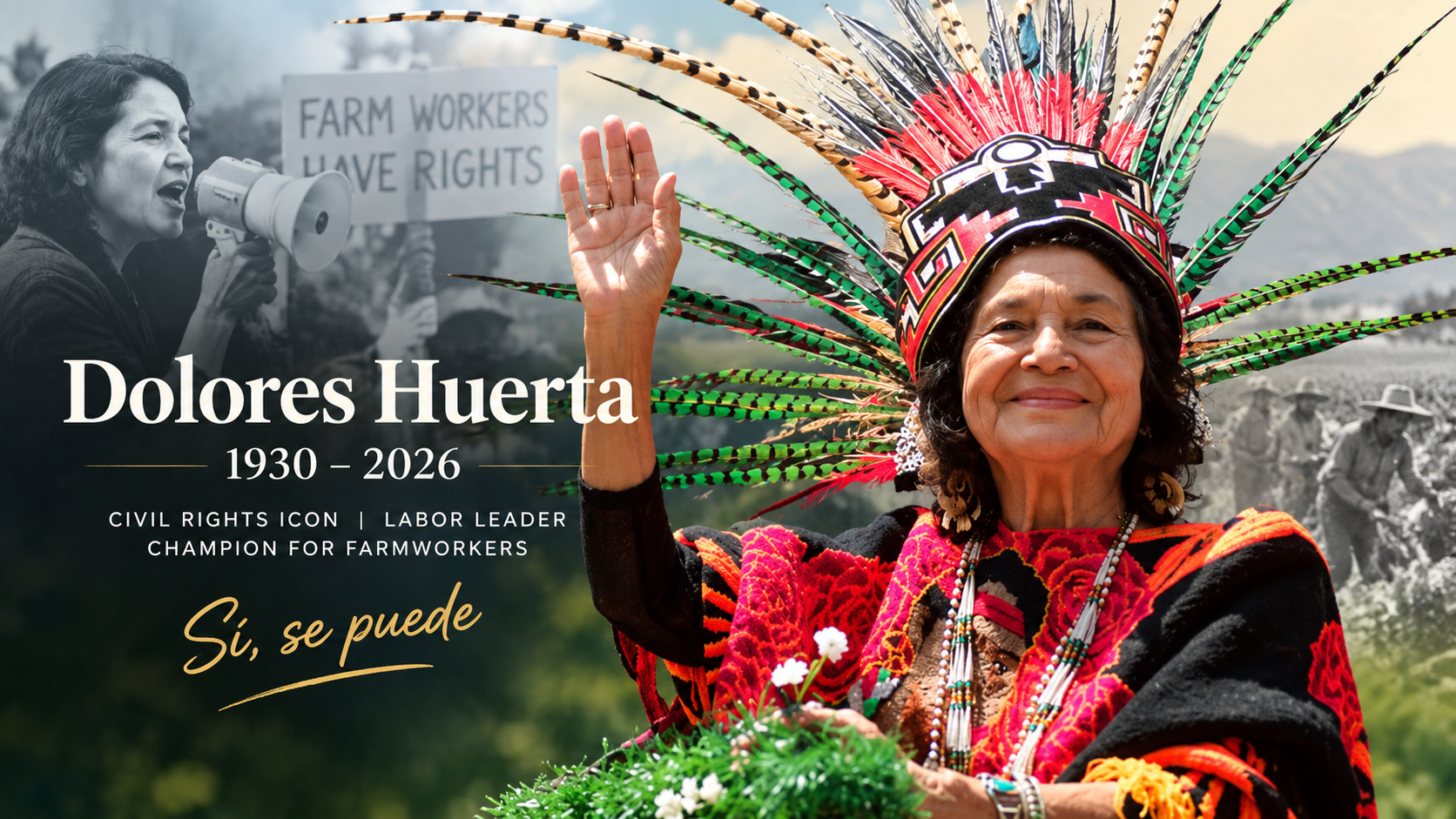

Dolores Huerta, one of America’s most influential labor leaders and civil rights activists, has died at the age of 96. Her passing on October 28, 2026, marks the end of an extraordinary life dedicated to improving conditions for farmworkers and advocating for equality and social justice.
A Lifetime Dedicated to Farmworkers’ Rights
Born in 1930, Huerta became a leading voice for agricultural workers who often faced low wages, difficult working conditions, and limited legal protections. In 1962, she co-founded the National Farm Workers Association with fellow activist César Chávez. The organization later became known as the United Farm Workers (UFW).
Huerta played a significant role in organizing farmworkers, supporting strikes, and encouraging consumers to boycott grapes and other agricultural products. These efforts helped draw national attention to workers’ struggles and contributed to improvements in wages, working conditions, and labor protections.
Her advocacy also helped advance California’s Agricultural Labor Relations Act of 1975, which established collective bargaining rights for agricultural workers.
More Than a Labor Leader
Huerta’s work extended beyond labor rights. She advocated for women’s equality, voting rights, immigrant communities, and broader social reforms. Her famous phrase, “Sí, se puede,” meaning “Yes, we can,” became a lasting message of hope and collective action.
In recognition of her decades of service, she received the Presidential Medal of Freedom in 2012, one of the United States’ highest civilian honors.
A Legacy That Continues
Even in her later years, Huerta remained involved in activism and spoke out on issues affecting working families and immigrant communities. Her commitment to justice continued to inspire people across generations.
As news of her death spreads, tributes are highlighting not only her historic achievements but also the movements she helped build. Dolores Huerta leaves behind a powerful legacy of courage, organizing, and determination.
Her life reminds us that lasting social change often begins when ordinary people unite to demand dignity, fairness, and equal rights.
